The 5 Most Effective Learning Methods for Exam Preparation in 2025
Feeling overwhelmed by exams? Stop re-reading notes. Learn how to study smarter, not harder, with 5 scientifically backed learning methods to boost your grades.
The 5 Most Effective Learning Methods for Exam Preparation in 2025
Exam season is often synonymous with stress, long nights, and cramming. But what if you could learn more effectively and make the most of your available study time?
The key isn’t just to study harder, but to study smarter. By integrating scientifically backed learning methods into your routine, you can improve your understanding and long-term retention.
Here are the 5 most effective learning methods to help you prepare for your exams.
1. Spaced Repetition and Active Recall
This duo is a powerhouse for memory. Instead of studying a topic intensely in one go, Spaced Repetition involves reviewing information at calculated, increasing intervals. You review the material just as you’re about to forget it.
This pairs perfectly with Active Recall. Instead of passively re-reading your notes, you actively retrieve information from your memory. The simplest example is using flashcards. Don’t just flip the card, try to answer the question out loud first.
This combination forces your brain to build stronger connections, leading to robust, long-lasting knowledge.
Learn more: Boost Your Grades with Spaced Repetition and AI Flashcards
2. The Feynman Technique
Named after Nobel Prize-winning physicist Richard Feynman, this technique is the ultimate test of true understanding. The process is simple:
- Choose a concept you want to learn.
- Explain it in your own words, as simply as possible, as if you were teaching it to a 12-year-old.
- Writing or speaking the explanation as simple as possible will instantly reveal any gaps in your knowledge.
- Review your source material to fill those gaps, then refine your simple explanation.
As Feynman said, “You must not fool yourself, and you are the easiest person to fool.” This method is a direct way to identify what you don’t know so you can fix it.
Learn more: Learn the Feynman Technique: step-by-step method, examples & a 7-day plan
3. Chunking
Our brains have a limited working memory. Chunking is the process of breaking down a large amount of information into smaller, more manageable chunks.
A classic example is a phone number. It’s much easier to remember (123) 456-7890 than 1234567890.
By grouping related concepts, you reduce cognitive load and make complex topics less intimidating. To practice this, actively look for patterns, group related items together, and then try to visualize or recall the chunks (e.g. with flashcards or quizzes).
4. Interleaving
Instead of “blocking” your study time with, for example, 3 hours of Math, then 3 hours of History, Interleaving involves mixing different topics or subjects within a single study session.
For example, try 45 minutes of Physics problems, then 45 minutes of memorizing History dates, then return to a different type of Physics problem.
This “shuffling” feels harder, but it’s more effective. It challenges your brain to actively retrieve different types of information, which boosts long-term memory and keeps your concentration levels high.
5. Mnemonics and Storytelling
Mnemonics are memory aids that help you remember information through simple associations. You probably already use them. For example, to remember the order of the Great Lakes, many students use the acronym HOMES (Huron, Ontario, Michigan, Erie, Superior).
Storytelling takes this a step further. Our brains are wired to remember stories. By embedding facts into a simple narrative, you create visual and emotional connections. This is especially useful for stubborn information that just won’t stick, no matter how many times you review it.
Conclusion
Finding the right study method is personal. Not every technique will work for every subject or every learner. The most important step is to experiment and discover what combination works best for you. Whichever method you choose, modern tools can make applying these strategies seamless, efficient, and even fun. This is where a specialized tool can make all the difference. okti is an AI-powered learning app designed to integrate these proven principles.

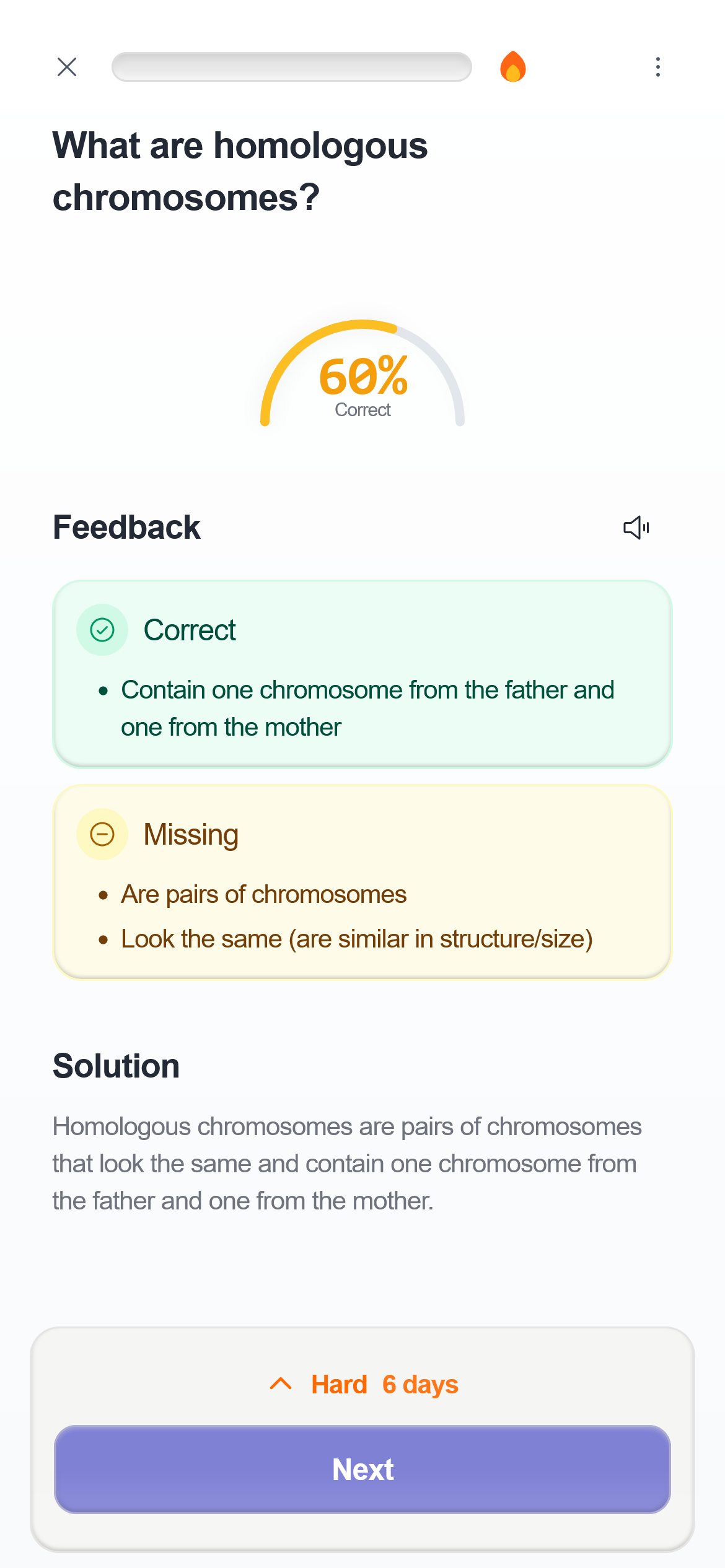
okti helps you to learn effectively by generating flashcards from your PDFs or photos in seconds. Its AI feedback feature is perfect for practicing Active Recall and the Feynman technique (self-explanation) to ensure you truly understand the content — you can even speak your answers out loud and okti transcribes them and gives you feedback. If a topic doesn’t click yet, the new Tutor mode builds a personalized path of interactive lessons, and an Explain button on every flashcard and quiz question explains the answer in simple terms. By automating the creation and using the Spaced Repetition scheduling, okti lets you focus on what matters: revision and active retrieval for long-term retention.